Friday, 12 February 2010

Feedback


To get feedback on my magazine the first thing I did was create an online survey I sent out to people along with links to my finished magazine. I got 20 responses.
(click to see larger)

Here are my results
100% said they 'yes', they liked my magazine

The thing most liked about my magazine was the images and the layout.

Most said 'yes' to it fitting the target audience. Comments included things like.
'Maybe should have had a male artist on the cover'

All but one said they wouldn't change anything
'More images', was the only comment

75% said they would buy it.


Here is a few graphs showcasing the results

Thursday, 11 February 2010

My Magazine

COVER LINK ------------ https://docs.google.com/fileview?id=0BzZ6urxriOlaYmQ5MzBjMjItZmY0My00MTBiLTlkODctYWM1NWQ0MDc1Y2Zh&hl=en


CONTENTS LINK ----------------- https://docs.google.com/leaf?id=0BzZ6urxriOlaNzYxMjI4NmItZTRkNy00MWE3LWI1YjUtNGY3NGUwMjJkZjlk&hl=en


DOUBLE PAGE SPREAD LINK -------------------- https://docs.google.com/fileview?id=0BzZ6urxriOlaNzU0OTRkZDctNjA0My00NTM5LWFiMTEtODg0ZWY2MzBmYmQz&hl=en

Evaluation of my Finished Magazine

Overall I stuck to a layout which is very similar to the ones looked at for research. Even though I created a look which has an individual appeal I think it is really based on a very similar and simple layout which a lot of magazines use. I included the basics such as; a masthead showing my magazine's name and identity, a large cover image of an artist looking into the camera and using the rest of the page for main sells. Of course I think the differences are just as important as I want my magazine to stand out from the rest. I used a female on the cover of my magazine although it is mostly directed towards men. I think not only will this appeal to men but also women who see a strong female figure prominent on the cover of a music magazine. I used a bold font or my masthead but it is also quite an unusual font and one which is not just completely plain and simple. Also to make my magazine look as realistic and genuine as possible I included things like the bar code and the sale date for authenticity. All over I wanted aspects to attract my modern and older rock audiences.

I think my magazine represents the rock social group. The use of a black and white image of the cover will appeal to the classic rock loving audience as it makes the artist seem older and therefore more appealing. I wanted to attract young people as well as old classic rock music lovers and also appeal to part of the modern music audience. As my artist is young and striking it represents my audience being interested in image as well as music. The style shown in my magazine reflects the style worn by the people interested in this particular rock genre.

I think that a publisher like Bauer (http://www.bauermedia.co.uk/) would be most likely to publish my magazine as they currently publish magazines like Mojo, Q and Kerrang. They already have an established audience similar to my magazine's genre. I think that not all newsagents will stock my magazine as many smaller institutions only stock the most popular and common magazines and don't show a full range of genres. I think shops like WHSmiths and Boarders who stock many different and genre specific magazines as well as the common ones. Although I think my magazine is quite mainstream I also think it may have a place in some specialist record shops who sell a select few magazines.

I spoke about before in a previous blog entry (http://sdcmediaasniamhoneill.blogspot.com/2009/10/target-audience.html) who I think my audience would be before and I think it still stays true to that after having finished my magazine. I think the age average is around 30 , which lower than examples I looked at but only because it think I also appeal to a lot of younger people as well. I think about 70% of my readers will be male but I have made to room to appeal to women as well. I referred to the magazines publisher's website for this information eg. http://www.bauermedia.co.uk/Brands/Mojo/.

I think I attracted my target audience mainly by having a believable and proffessional looking layout. I also think the language and the style of writing helps as it is relevant will mean something to those interested in the genre and maybe not mean something to anyone else. I think having proffesional looking and well placed photos help the attraction of the audience too. As a photo is usual the thing which first draws your attention they have to reflect the feel of the whole magazine, especially the cover image.

I think I learnt a lot about new technologies while doing this project, specifically with Adobe InDesign. Prior to this I was just using Photoshop for everything and although I am quite sufficient in using it, InDesign proved to be the more helpful software. It enabled me to have a outline and a frame ready for me to work in which made it easier to keep the magazine looking as professional as possible. It was very helpful as it kept all my columns, headings and images parallel and in proportion with each other.

When I look back to my preliminary task I feel I have progressed a lot since. My ability to use InDesign has improved and so has my understanding of magazines as a whole due to extensive research. I think because this magazine was planned so well it made the process a lot easier and funner. I had all the information and statistics ready before I made it and I has clearly set out my ideas so I knew exactly what I wanted to achieve along the way. Although some idea changes were made due to being able to work so flexibly with InDesign, my initial ideas and basic structure was achieved.

My article

Here is the complete un-edited version of my interview


What made you decide to become a solo artist?

I don’t think I ever wanted to be solo artist. I always wanted to be a guitarist and saw myself as part of a band. It wasn’t until I was 25 that I started writing my own songs but I had been in bands for about 10 years before that. So I think I couldn’t really find an outlet in the band I was in, Ash. I had a few co-writes here and there but I realised that the songs I was writing were quite different to what they were writing. So my first solo record was just a bit of laugh really. I went to San Francisco with some friends, made the record and ended up releasing it on Ash’s managers label [Double Dragon Records] and it got really great reviews and lot of downloads and did really well. So I when I left ash I thought ‘well what am I gonna do now? And I threw myself into another record and now I’ve done three! So its kind of crept up on me and its become something that I never really aspired to and I miss being in a band when im solo and that why I play with other people. But I think its about time that I gave it the time that it deserves.

When did you start playing guitar and did you take lessons or are you self-taught?

I started playing guitar when I was about 14 when my big sister played guitar and went to university and left her guitar behind. So I taught myself and then I got lessons at school in a Saturday morning music club. Then I had drum lessons, then guitar lessons and I joined a little group there. They I joined a band when I was 15. Actually I think being a band taught me more than the lessons did.

Why did you change the name of your new album from ‘Cinnabar City’ to ‘New Worlds’?

‘Cinnabar City’ I really liked and I had lots of graphic, cartoony artwork to go with it. Quite far in I sort of realised I didn’t want the title to be something that had to be explained as the music was very direct and much more direct than any other record I’ve made. I wanted the title to be more of a statement. I think Cinnabar City is quite fun and I think there is also a cinnabar island in Pokemon. So when I was in America there was lots of ‘So you must be a really big Pokemon fan’, and so I thought maybe not. So I wanted something that meant more to the record really, although I do really like it.

This is your third solo album now. Do you plan your albums or do they just come together when you’re ready?

More planning went into this record in a way. I kind of had the idea of what I wanted to do with the producer, which was to make a record, which I guess, fitted around the budget restrictions. I only had a certain amount of money so the idea was to do something live in a week really quickly. Beforehand me and Rob [Ellis] who was drumming, we rehearsed it and had made sure that if it didn’t sound really good with two people then it wasn’t gonna make the record. Whereas with the other records we really struggled to play it live and it came together in the studio. So this one is very different. It always seems that at the end of a record, like now, I’m thinking about the next one and I feel like ‘fuck, what am I going to write about’ and it feels quite daunting. It’s hard to explain how suddenly you just have a bunch of songs and you have a theme and inspiration lyrically from somewhere. Then you find a producer and get a band and you go and do it. But it can be quite different from record to record.

I notice a lot of your songs are in unusual time signatures. Do you think about things like that when you are writing songs or does it just happen for you?

I think that’s just how I write. I like things to be surprising and interesting like the music I respond to. So the bands that I’m influenced like XTC especially. Their arrangements aren’t just verse, chorus, verse, chorus, and middle eight. They go off in different weird places. Also bands like Todd Rundgren and Captain Beefheart use unusual time signatures and I like that stuff, it keeps me interested. Dirty Projectors as well. I think the musicians that I work with like Rob, who is a great drummer in the way that he will make a drum part that sounds complicated when broken down but in a song it works. So I think a lot of my songs can be deceptively complicated like ‘Bastado’. Its just a pop song but to learn it and to play it with whatever band I have at the time is always a struggle because the time signature is all over the fucking place. So its kind of deceptive at the time and I also think that’s kind of why musicians like my music more because they understand and when they sit down and try to play it they realise it’s a bit weird. But they still work as pop songs. But I don’t sit down and try to do that, it just happens.

Why did you decide to create your own record label?

This was before labels went bust really. It was on the verge of the record industry going a bit weird and just when people stopped buying records. So I was trying to get a deal and talking to labels like Parlophone and V2 and although they liked it there was a lot of waiting. I think people were sort of on the verge of loosing their jobs and its interesting that a few months later V2 collapsed and the guy I was talking to at Parlophone got sacked. So it seemed like a really unstable place and that it wasn’t for me. My manager at the time had set up previous labels and said look we can do it ourselves. Kind of naively I said ‘ yeah great!’ and it had been tough and it means I’ve had to put all my money into it and when I tour I don’t have a label supporting me. But then these days I think when you are signed to a label your not going to get that anyway. I think it was just a way of avoiding being sucked in to the complications of being on a major label. Bat for Lashes are on EMI and I’ve seen what its like to be involved in a big corporation. On one hand your marketing budgets are really great and the press is brilliant and the exposure is brilliant but artistically you are quite compromised and I don’t want to deal with any of that stuff. On the flip side I can do whatever I like artistically but sometimes I don’t have he money to pay for big videos and marketing. There’s good things and bad things but ultimately its been really great for me and i think being independent is good.

How did you end up as the live guitarist for Bat for Lashes on their recent tour?

Just a friend of a friend I think. Natasha was putting a new band together. I think previously that her live band had been quite twee in a way. She didn’t really have a drummer, she had a few girls on violin and had a load of weird instruments on stage. But for her new album I think she wanted a bigger sound. So a friend of mine recommended me to her and I sort of ‘auditioned’, in a really loose way. I think because I was girl it helped and she wanted women around and we are the same age, Natasha and I. It was to play bass, guitar, keyboards and all sorts of stuff so it was absolutely brilliant. I’ve been doing that for eight months and it’s been great.

What’s the difference between releasing a record and touring on your own compared to doing it with other people and which do you prefer?

It’s easier touring with other people because it’s not your baby and you don’t have to do any press, you don’t have to get involved in any other stuff. All you have to do is get on stage and play and all this pressure is taken off. Whereas when I do my own thing, it’s my name and its me up front it’s a totally different experience. They are both great but there’s obviously something in the solo thing that I don’t get anywhere else which is why I keep doing it. But its very stressful and more rewarding in a way than playing with other people.

What’s your worst gig experience?

I’ve had many. Quite recently at a gig in Chester the promoter was having a nervous breakdown and his wife just left him and he didn’t have the money to pay the band. So my tour manager and my bass player had to try to take him to a cash point so he could pay me and it all got a bit stressful and quite violent. It was really distressing. Its weird I’ve done all kinds of gigs and I’ve done stadiums and ring tours and I’ve played with all sorts of people but I always end up doing bizarre club shows with not that many people where you have fights with the promoter. So I’ve sort of experienced a bit of everything really. Hopefully that will change next year.

Who are your biggest musical influences, modern and older?

Not sure about recent influences. I don’t really listen to much music anymore, Its almost like when its your life when I want to switched off and relax I listen to Podcasts, watch films or read a book. But I did really like Fever Ray’s record; I like Dirty Projectors who are really brilliant they do something really interesting. Also Marnie Stern who is an American guitar player she’s on Kill Rock Stars label. She’s really amazing. But nothing really effects what I’m doing. I think all my influences in terms of approach to recording are people like David Bowie Roxy Music, Captain Beefheart, Kate Bush, all that sort of era. But some of that’s not even musically. Like for David Bowie its how prolific he was, how many records he made and how influential he was. With Kate Bush it’s her independence and the fact that she’s done everything in the way that she wanted to do it. She’s quite unique. With captain Beefheart its his approach to making music, so its not necessarily a musical influence. I don’t have any guitar heroes or anything like that but certain things do inspire me.

What have you been listening to yourself this year?

Well bat for lashes every single night. We had this cool band Yeasayer supporting us and school of seven bells supported us. I guess also more films than music. Moon was amazing! Yeah I’ve been influenced by all sorts of things.


I think I'm going to present my article as an interview rather than writing it up because I think it looks more appealing that way and was done like that in a lot of examples I looked at.


I also added an introduction to make it seem more proffesional
As Charlotte Hatherley releases her 3rd solo album, DUETS' own Niamh O'Neill talks to the ex-Ash guitarist about influences, touring with Bat For Lashes and 'New Worlds'

Monday, 1 February 2010

Photo Edits


Here is the edited version of the first image on my last blog post. I am going to use this as my cover image for my magazine. I cropped the image down so it is just her head and shoulders but also some of the space around her so she is centred and proportioned well within the frame of the picture. I changed the image into grayscale mode to make the image black and white too make it more dramatic and fitting with the audience. I also enhanced the dramatic lighting on her face to give more dynamic and depth to the image. I smoothed out her complexion using the blur, smudge and various other tools. I enhanced her eye makeup to make her eyes more dark and dramatic and also to make her look more proffesionally done up. Her image on my cover will relate to the male audience as she is looking directly at you and looks striking and pretty.


This the whole final image which I will use as the backgorund for my double page spread. The black half of the page is for the interview and the writing and so I can use white other colours to stand out more. I brightened up the image quite alot to make it more colourful and eye-catching. I wanted a contrast to the black and white cover shot to show the range my magazine has. Her album which I talk about in the interview is based around the idea of colours and such so I thought it would be fitting to that too. I also touched up her face to make her skin smoother and one toned to look more pleasing on the page.

Monday, 25 January 2010

Photos

This is the picture I have chosen to use as my cover image. I am definitely going to edit it so it is just her head and shoulders. I picked this one as it was the best one of her looking straight into the camera giving the connection with the audience I needed. I also really like the lighting on half of her face which gives it a dramatic effect. I don't like the background either so I will crop it down to size. She is wearing a fun and brightly coloured top but a plain black blazer which gives her two sides to her image and makes her more edgy. I also think I will edit this picture into black and white as from my previous blog entries I noticed it is a common thing with similar music magazines.


Here I was trying to get a close up for my cover. Although she is looking straight into the camera I'm not going to use it as i think it is too close up. Also the lighting is too bright and so washes out her face. Also because of the orientation being landscape I cannot use it for my portrait cover.


This is the picture I took which I have chosen to use as the main image on my double page spread. I wanted a colourful picture here as the cover image is dark and in black and white. So she is wearing brightly coloured clothes and standing against a contrast of colours as the background. Also the colours relate to the theme of the artist's new album. I didn't do much editing on this image, except a slight brightening of her hair and slightly smoothing out her skin to look as professional as possible. This also makes it more appealing to my target audience.


Monday, 23 November 2009

Fonts


I have to pick fonts styles for my magazine so I am going to look closer at the pages I have already looked at for examples.

Masthead/Logo Font

The thing I notice about these fonts is that they are all really big a bold. They are also all in capitals to look larger and to stand out to the rest of the text on the cover.
With a few exceptions the fonts are mostly angular and square-like. The exceptions being the flowing tail of the letter Q. It looks bold but also kind of like calligraphy. For Uncut again it is bold as it is a serif font it looks more traditional which, in the case of the magazine, suggests an older generation of music. The simple boldness of NME and Q looks very modern
and new. The the other obvious thing to mention is the colours used. Every single one uses red in some way and often incorporates with black or white or both.
Overall I think the boldness of the fonts style and the colour suggest it is directed more at males. They are all very simple so as not to over crowed the page and confuse the audience. This makes them easier to recognise again and again.


I wanted to develop the idea for my name and logo first as I wanted to create my magazines identity before proceeding with the rest of my layout. I decided to go with the name DUET. I wanted a short and snappy name because most magazines with long names are abbreviated when spoken about anway e.g New Musical Express shortens now to NME. The name also has musical connatations as a duet in music means a composition for two voices or instruments. After looking at my research the obvious colour to go with for my text design was red. Red seems to be the colour most music magazines are regognised for. I think this is because it stands out very well against any background. It is so bold and audacious; it usually dilutes the colors around it. Which is what I want it to do against all the other magazines of other genres.


This is my initial idea for my own logo font. I wanted to pick something bold to fit in with the existing magazine examples but also something which had Americana feel to it and also something less modern and a bit older looking. I think the serif emphasises that feeling and style.
My font is closest in similarity to the Uncut font and I think that reflects the similarity of the style I am trying to achieve through out the rest of my magazine. Also similar is the shadow of the font. It creates more depth and layers to the title and also makes it more interesting but without doing too much to it. My font is a mixture of a font I used called WOODCUT and some of my own editing.

Monday, 9 November 2009

Flat Plans

This the the flat plan for my own magazine cover. I went with the name 'Duet' for my magazine as it has musical connotations and also represents the duet between the two styles of music I will feature, modern and classic rock. It is also short and simple.
In my layout the main features are the image and the masthead/logo. I have done this as in my research these are the two most important things when it comes to capturing the buyers attention. Sometimes established and recognised magazines have the artists image covering part of the masthead. I have decided not to do this as I don't want to assume that it is an old magazine but maybe a relatively new one, in which case I need to make the name and the brand clear. The artists image takes up the majority of the cover and the rest of the text fits around it. I have also decided to feature the name of the artist who is on my cover in a recognisably larger font than the rest. I also have a tag line running across the bottom of my masthead. At the moment it is ' Classic and Modern Rock', but I think this may change later when I am creating my magazine.


This is the flat plan for my contents page. The main feature on this page is again the image. The image will be of a different artist than the one on the front cover but showing more than just there head a shoulders. The actual table of contents will fit around this like in Mojo. I have also included room for an editors note and maybe an advertisement.

This is the flat plan for my double page spread. This one is pretty loose as i'm not 100% how exactly I want to do it but this is just the basic first thoughts for it's layout. I think I will have half the page as an image and half text. The largest piece of text is the artists name and then a sub heading below it.

Monday, 2 November 2009

Analysis of existing magazines

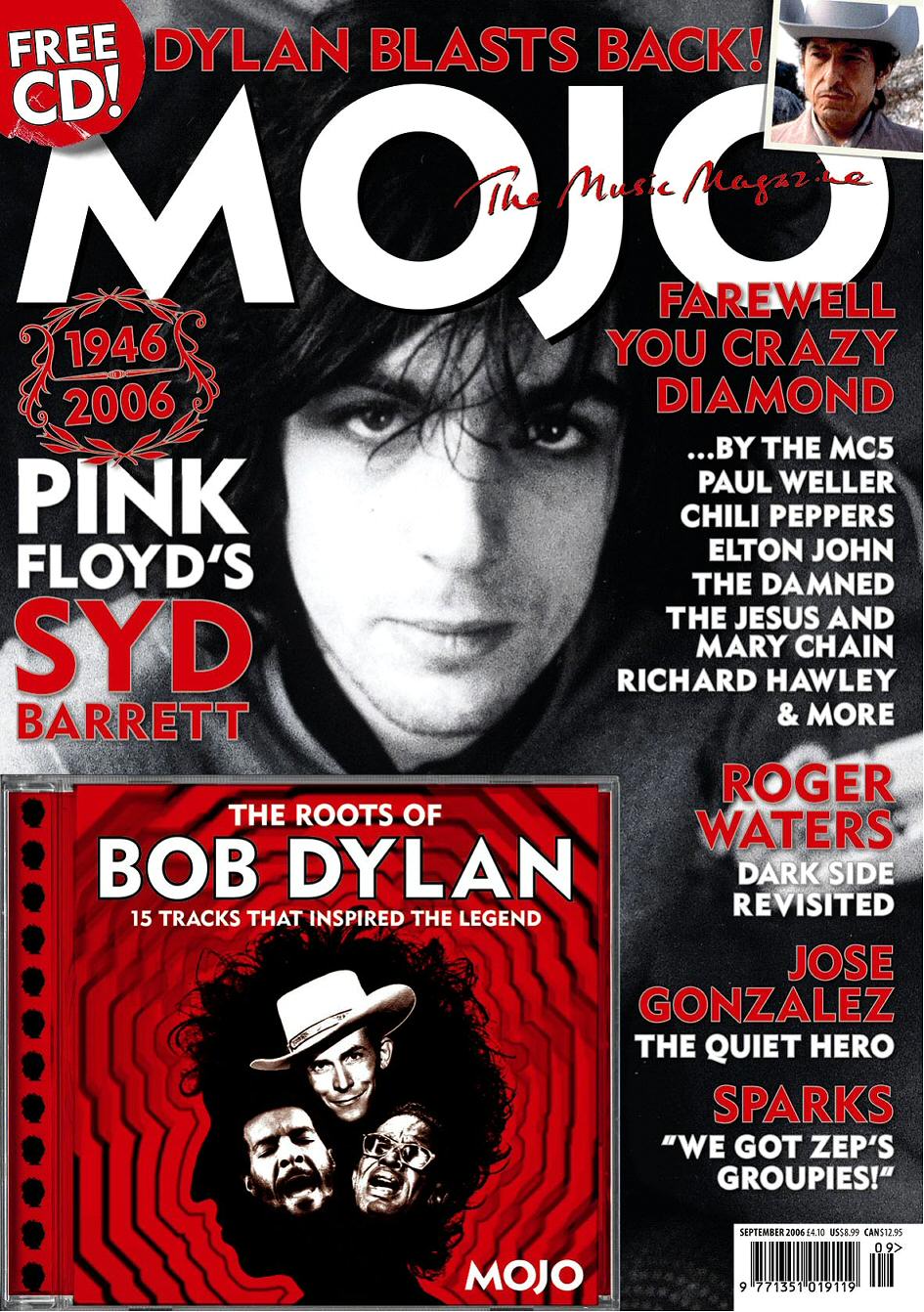
This is the cover of Mojo Magazine for the month of September 2006. The first thing I notice is the use of very little colour. Everything is black, white or red in terms of the images and the fonts. I think red is used a lot on this front cover as it has strong connotations of power, passion and energy. Red is known to stand out more than any other colour. This is useful for grabbing the attention of the buyer. The Brand logo/masthead is in a bold white font to be able to stand out against the darkest part of the black and white image in the background. There is a tagline, again in red, across the top of this reading 'The Music Magazine'. The rest of the font is in a similar bold fashion and looks exactly the same all over the cover except the changes in font size.
The background and main images takes up the whole cover and so the text and other images have to work well around it and be positioned so that they are easy to read. In the image Syd Barrett is looking straight at the camera. This is to create a connection with the buyer when they see the magazine in stores. If he wasn't looking at the camera it wouldn't have the same dramatic effect.
The language on the cover is pretty simple and straight forward and all refers to artists and music. There are puns like 'Farewell you crazy diamond', which is a play on words of the title of a Pink Floyd song. This is to attract the fans of their music. To anyone who didn't know the song it would mean nothing. This shows it's trying to create a direct connection with the target audience and not with anyone else. There are also examples of alliteration in 'Dylan Blasts Back'. This makes the sentence more fun and memorable, creating an even greater impact on the reader.
The whole cover speaks to the specific target audience. As it is directed more towards men the boldness of the fonts and colours reflect that. The cover is simple and effective and therefore is accessible to anyone who likes that kind of music and can be related to by a range of ages.


This is a recent cover of Uncut magazine featuring Neil Young. Although there are more colours being used here it is still pretty basic and primarily features black, white and red again. Again the red has the same connotations and in this case is used as the colour of the title font and stands out effectively against the black and white image.
A lot of other things are similar between the two magazines. Again in this one Neil Young is looking straight at the camera. It features a very similar use of words at the top of the cover, ' Springsteen’s back', in exactly the same position of 'Dylan Blasts Back' on the Mojo cover and similar positioning of the image next to it. They both also feature a free CD and a small label-like graphic in the top left hand corner showing that. All of this shows that this style and genre of magazine follow a very similar scheme of layout and colours. I will defiantly refer to these two for ideas for my own cover. Also after having looked at a few examples of other covers in my research including, NME and Q it is clear that red is the most common colour and I will defiantly incorporate it into my own cover.


This is the contents page from a recent issue of Mojo.
The first thing I notice is the magazine name/logo again reinforcing it's identity to the reader. Again the colours are simple and are not different from those used on the front page; red, white and black. All the artist names and the information along with it is written in white to stand out against the black and enable the reader to recognise the names of their favourite artists more clearly. The other main point of the contents page is the image. This is important as it shows a different artist to that on the cover (in this case Kings of Leon). His name, 'Trent Reznor' is next to the image along with a page number so you know exactly where to go in the magazine if you want to see that particular article. There is also a quote from the artist to give you a taste of the genre and topic of the interview. In terms of the layout of the text on the contents page it is very linear and easy to follow and is left aligned. It also seems like the text is fitting around the outline of the image. It fits together well and looks clean and professional.


This is a double page spread from Mojo magazine. It includes the introduction and the beginning of an article on Justin Vernon of Bon Iver.
The main features of the article which stand out first are the image and heading. The image takes up most all of one of the pages and almost half of the other. This shows the importance the image has on the reader. It lets you know who or what the article is about in an instant, which the title doesn't always do. The heading on this example 'American Gothic', relates to the style of the artist and the style of the rest of the layout. Everything matches together under one theme to create a whole and complete representation of the artist. Black and white is the main colour scheme as again it matches the gothic theme and the B&W image. There is also a small use of a dark gold-like colour to add emphasis to certain words including the artists name and writer’s name. There are only two font styles on the page. The first is a messy, gothic type writer style font. This features on the main title and on the sub heading/introduction. This stands out from the rest of the simple and smaller text in which the rest of the article is written. The fact that it is simple and minimal makes more attractive to look at more professional. The introduction must stand out and use emotive language to get you to read the rest. It uses words like 'magical' to create an image and to again relate to the gothic feel to the piece. I notice that on a lot of articles it starts with a quote from the interviewee. The buyer is going to recognise the artist straight away if it is an artist they know. But for those who don't the use of a continuous theme and an attractive and simple layout, which is easily relatable to the male target audience, will persuade you to read and learn about the artist.


Click all images to see larger.